
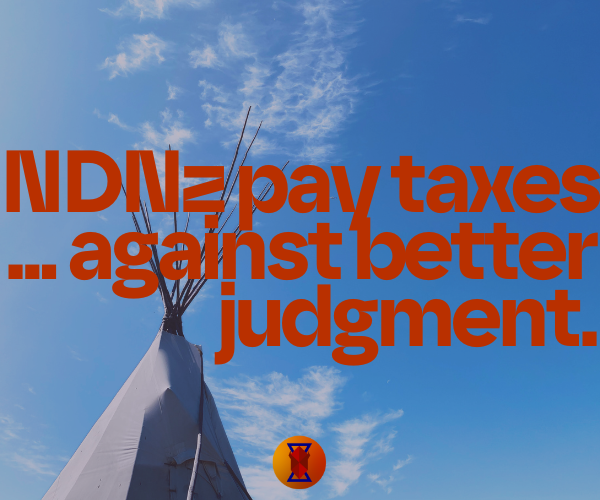
Like clockwork, every generation of Indigenous tribal citizens has to stand before an ignorant white or non-Indigenous other person of color and swear by the Creator that yes, indeed, we do pay taxes just like everyone else.
Most Americans are subject to the laws of the U.S. federal government and the state government where they reside. Enrolled tribal citizens are subject to federal, state, and tribal governments. We are one of the most regulated groups of people in the United States and its colonies.
Below is break-down of what we pay and what might be exempted from. Enjoy!
Do Tribal Citizens Pay Federal Income Tax?
Yes.
Like every other American citizen and non-citizen resident working in the United States, Indigenous tribal citizens are subject to the federal income tax as prescribed by their income tax bracket. There is no regular, widely-available exemption for private citizens of any government, be it federal, state, or tribal, to avoid paying applicable income taxes. Even if a tribal citizen lives within the boundaries of their tribal nation, they are still subject to federal income tax.
Do Tribal Citizens Pay State Income Tax?
Yes, depending on where they live.
If a tribal citizen lives outside of the boundary of the tribal nation where they’re enrolled, they are subject to any applicable state income tax.
If a tribal citizen lives within the boundary of the tribal nation where they’re enrolled, they are most likely exempt from state income tax, provided that tribal nation does not have an agreement with a state.
Do Tribal Citizens Pay Sales Taxes?
Yes.
There is no regular, widely-available exemption for private citizens of any government, federal, state, or tribal, to avoid paying applicable sales taxes.
Do Tribal Citizens Pay Property Taxes on the Reservation?
No.
Tribal citizens living on reservations are exempt from U.S. property taxes. These lands are more often than not held in trusts administered by the Bureau of Indian Affairs. Tribal citizens are not allowed to sell these lands or operate for-profit businesses without consulting federal and tribal guidelines, subject to approval.
Do Tribal Nations Pay Taxes on Casino Revenue?
Not explicitly as taxes.
Tribal nations may be subject to a “gaming exclusivity fee” to the federal government, based on profits and any other applicable gaming compacts with the federal government or state governments.
For example, Oklahoma collected over $210 million in fees for tribal gaming exclusivity rights for fiscal year 2024. Those fees came from $3.47 billion in revenue, according to an estimate from the state of Oklahoma.

But Do Tribal Citizens Get Anything Extra Out of It?
Not really.
In fact, tribal citizens continue to be one of the most under-funded groups of people in the U.S. In the 2025 GOP budget, even the $8 billion for the Indian Health Service budget is a fraction of the needed $73 billion.
So the next time you come across someone who wonders aloud or even asserts that Tribal Citizen don’t pay taxes, now you have the correct answers to share.
Good luck out there!

 Walking Bull // Storytelling
Leave a comment